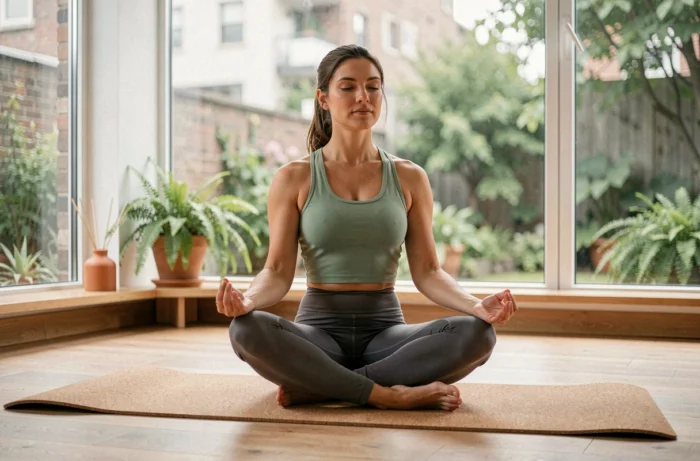
A person living with chronic lower back pain walks into a group yoga class. Twenty minutes later, they are asked to hold a downward-facing dog for an extended period, with no modifications.
This common scenario highlights a blind spot: yoga is one physical activity among many, not a treatment protocol, and it requires precise adjustments whenever a health condition is involved. The WHO also points out that all physical activity benefits mental health and sleep, and that sedentary behavior should be limited, without presenting any one discipline as a universal cure.
Yoga and chronic illness: adapting poses without improvising
When you live with endometriosis, fibromyalgia or rheumatoid arthritis, the question is not whether yoga “feels good.” It is which poses worsen the pain and which relieve it, at what pace and with what kind of guidance.
A clinical protocol currently in development is specifically studying the effects of yoga therapy on chronic pain and endometriosis symptoms. This is not established evidence, but it does show that the link between yoga and a health condition must be tested, not taken for granted. Until the results are published, claiming that a sequence of poses “cures” endometriosis is a therapeutic promise, not a wellness benefit.
In practice, the latest news from Jardins Du Yoga regularly features adapted approaches, including sessions designed for specific groups. This kind of resource helps distinguish a supervised practice from a general class that does not take contraindications into account.
Several practical guidelines can help make a practice inclusive and safe:
- Tell the instructor about any health condition or chronic pain before class, even if the registration form does not ask.
- Stop any pose that causes sharp pain, even if the rest of the group is holding it: adapting does not mean giving up, but choosing a variation.
- Check that the instructor offers modifications (blocks, straps, alternative poses) rather than simply saying “listen to your body” without any technical guidance.
- Never stop medical treatment because you feel better during a yoga class: physical practice complements care; it does not replace it.
Wellness and therapeutic claims: where to draw the line
The wellness market uses vague language. Terms such as “treatment,” “healing,” “detox” and “energy balancing” appear on yoga class pages, even though they are not subject to the same regulatory framework as advertising for a medicine.
Physical activity is a complement to medical or psychological care, not a substitute for it. The distinction seems simple, but it can quickly become blurred when a yoga teacher tells students to stop taking an antidepressant or discontinue physiotherapy. Such cases are uncommon, but they do happen, and they affect the most vulnerable groups: people experiencing burnout, in remission or living with chronic pain.
A simple practical rule can help: if a yoga teacher makes a diagnosis, suggests stopping treatment or uses the word “therapy” without medical training, they are moving beyond wellness and into the illegal practice of a healthcare profession.
The uncertain status of yoga teachers in France
The legal framework for teaching yoga for pay remains unclear. Unlike other sports professions, there is no state-recognized qualification for this activity. Training courses range from a few weekends to several years, with no unified accreditation. This lack of regulation makes it all the more important for students to ask direct questions about an instructor’s training before signing up.
Yoga, Pilates and other activities: choosing what suits your needs
Yoga studios have faced growing competition from Pilates over the past few seasons. Closures of dedicated yoga studios have been reported, while Pilates attracts people looking for targeted muscle strengthening, particularly during rehabilitation after an injury.
This shift does not mean yoga is declining as a practice. It is moving into other formats: online classes, workplace sessions and occasional workshops. The choice between yoga, Pilates, brisk walking or swimming depends on your starting point.
- Joint pain or limited mobility: gentle yoga (yin or restorative) or machine-based Pilates allows you to exercise without bearing weight, while carefully controlling your range of motion.
- Stress or sleep problems: short yoga nidra or guided breathing sessions can help regulate the nervous system without intense muscle exertion.
- Getting active again after a long period of inactivity: walking is the safest place to start before gradually adding standing yoga poses.

Ten minutes a day: a realistic routine
Short sessions are gaining ground. Consistency matters more than duration, and choosing a regular time—first thing in the morning, during a lunch break or in the evening before bed—helps make the practice part of everyday life without disrupting your schedule.
It also helps to mix things up: a few sun salutations one day, a breathing exercise the next, and a yin yoga session at the weekend. This variety prevents boredom and works the body more fully than repeating the same type of session.
Taking care of yourself without turning wellness into an obligation
Yoga does not have to be sacred to be useful. You can practice without embracing a particular lifestyle, buying a hundred-euro mat or posting your poses on social media. Wellness begins when you stop performing it.
Ultimately, the only question that matters is a practical one: given my current health, joint limitations and level of fatigue, does this pose make me feel better or worse? If the answer is clear, everything else is secondary.