Walking for twenty minutes in the blazing sun with a polyester t-shirt stuck to your back is the kind of experience that makes you rethink the entire content of your summer suitcase. Choosing a light outfit for the heat isn’t just about putting on the thinnest garment in your closet. The fabric, cut, and even the color significantly affect the temperature felt on the skin.
Breathable Fabrics in Summer: Linen Is Not the Only Option
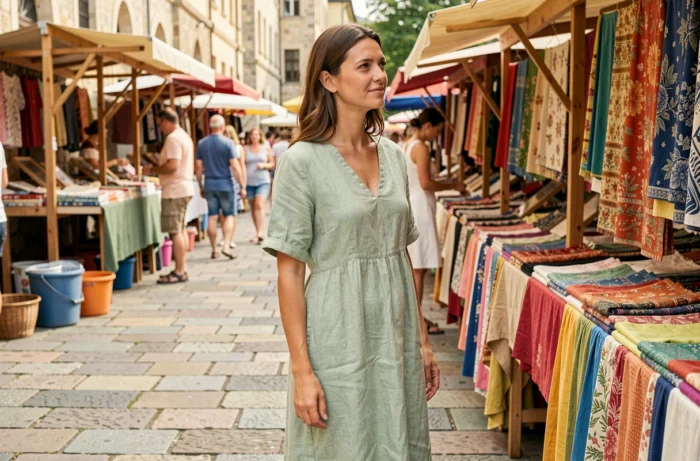
Everywhere you hear that linen is the queen of summer fabrics. This is true: its hollow fibers allow air to pass through and dry quickly after a sweat spike. Loose linen pants ventilate much better than slim jeans, even if they are thin.
Cotton remains a reliable choice as long as you check the weight. A thick cotton like sweatshirt material is not suitable. We aim for a lightweight, airy woven cotton, such as poplin or cotton gauze, which absorbs moisture without holding it for too long.
Synthetic blends pose a real problem when temperatures rise. Polyester traps heat and promotes odors. Some technical sportswear incorporates quick-drying fibers, but for everyday use in the city or on vacation, natural fabrics remain more comfortable over time. Opinions vary on cotton-linen blends (sometimes considered less breathable than pure linen), but they offer a good compromise in terms of maintenance since they wrinkle less.
To delve deeper into the ideal top when the thermometer spikes, you can read on Michelle Dastier for a useful comparison between short sleeves and lightweight shirts.

Light Colors and Heat: What Health Recommendations Say
French health authorities, in their heatwave campaigns updated since 2024, place wearing loose light-colored clothing on par with hydration among preventive measures. Santé publique France and regional health agencies explicitly mention this in their “heat and heatwave” fact sheets.
It’s not just a matter of style. Dark fabrics absorb more solar radiation and release that heat upon contact with the skin. White, beige, pale yellow, or sky blue reflect some of the radiation, which reduces the temperature rise of the garment itself.
The Trap of Total Black in Summer
Wearing black in the blazing sun means accumulating heat. In an urban context where asphalt already radiates, the comfort gap between a black t-shirt and a lightweight white cotton t-shirt is noticeable within minutes. Dark shades remain acceptable in the evening when direct radiation disappears.
Loose Cuts vs. Fitted Cuts: The Role of Air Circulation
The impact of the cut is often underestimated. A fitted garment, even in linen, loses much of its cooling power because it prevents air from circulating between the fabric and the skin.
A loose cut creates a natural ventilation effect with every movement. This is why oversized shirts, straight dresses, or wide pants work so well in hot weather. The principle is simple: the more space there is between the fabric and the body, the more effectively sweat evaporates.
Here are the concrete criteria to check before buying a piece for hot days:
- Ease at the armholes and waist, allowing you to raise your arms without the fabric sticking to your armpits
- The length of the garment, sufficient to cover areas exposed to the sun without creating a suffocating effect (a short-sleeve shirt is better than a tank top if you stay outside for a long time)
- The absence of tight elastic at the wrists, waist, or ankles, which blocks air circulation and causes sweat zones
Accessories and Sun Protection: What We Forget in Summer Outfits
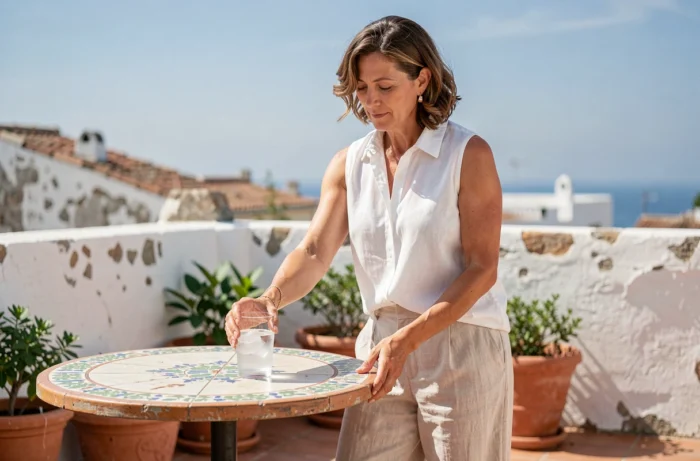
The outfit doesn’t stop at the top and bottom. Accessories play a direct role in thermal comfort and sun protection.
A wide-brimmed hat protects the face, neck, and ears. Caps cover the forehead but leave the neck exposed, limiting their effectiveness in the blazing sun. A straw or airy cotton hat remains the best ally for prolonged exposure.
On the footwear side, closed synthetic materials turn the foot into a sauna. We prefer leather sandals or canvas espadrilles, which allow the foot to breathe. Tanned leather, unlike faux leather, better wicks moisture and doesn’t stick to the skin.
The WHO Tip: Moisturize Your Clothes
The “Heat and Health” fact sheets from the World Health Organization recommend moistening your skin and even your clothes as a cooling strategy. Rubbing a damp cloth on your forearms or wearing a slightly wet t-shirt accelerates heat loss through evaporation. This simple gesture can lower the perceived temperature by several degrees, especially during heat spikes in the middle of the day.
Putting together an effective light outfit relies on three concrete choices: a breathable natural fabric, a cut that allows air circulation, and light colors that limit radiation absorption. These criteria, validated by both practical use and public health recommendations, truly transform comfort once the mercury exceeds usual thresholds.