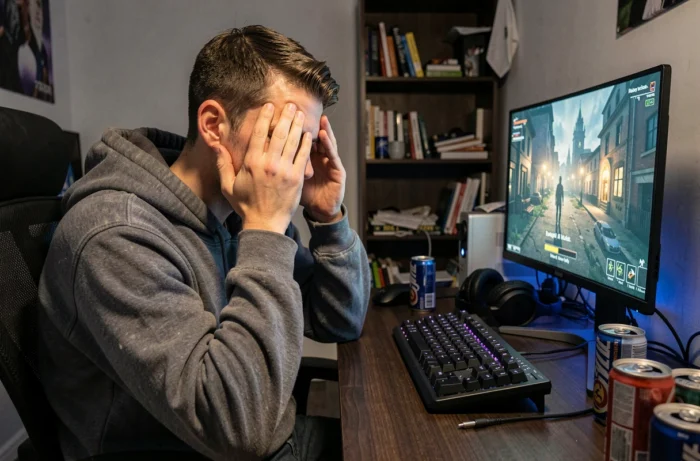
We know the situation: the game drags on, the last objective is within reach, and when you finally check the time, it’s two in the morning. The next day, fatigue sets in as soon as you wake up, concentration falters, and paradoxically, gaming performance also collapses. Sleeping better as a video game enthusiast doesn’t require stopping playing, but rather modifying a few specific habits around the session.
Gaming in bed or gaming before bed: the distinction that changes everything
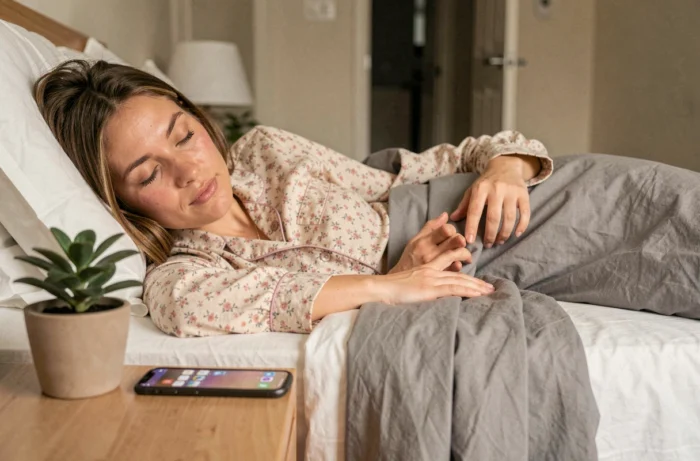
Most advice on sleep and screens focuses on when to turn off. In practice, the place where you play matters just as much as the time. An analysis published in 2024 in JAMA Pediatrics shows that evenings when interactive activities (video games, social media) are used once already lying in bed lead to falling asleep about half an hour later than evenings without screens in bed.
In the same cohort, each ten-minute segment of interactive use while already in bed is associated with a reduction in total sleep time that same night. Exposure to screens before bedtime but outside of bed has a significantly lesser impact.
Playing on a desktop PC in a living room or dedicated corner, then physically moving to bed, works better than finishing a game on a laptop or smartphone once lying down. The brain associates the bed with sleep when nothing else is done there.
As soon as games are introduced, that association blurs, and falling asleep slows down. Detailed resources on this topic can be found at insomniedugeek.fr, which specifically addresses the link between gaming and sleep disorders.
Suspense and cortisol: why certain game genres prevent sleep
Blue light is often cited as the main culprit. It plays a role, but the narrative excitement of a game has a more direct physiological effect on sleep quality. Games that generate suspense (battle royale, horror, competitive ranked) cause a rise in cortisol and an increase in heart rate that persists after the session ends.
Specifically, finishing a tense ranked match of Valorant or a run of Lethal Company at midnight leaves the nervous system on high alert. The body takes time to calm down. Not twenty seconds, not five minutes, but sometimes several tens of minutes.
Adapting the type of game to the time of night
The solution isn’t to cut everything off at 9 PM. Competitive or narratively intense sessions can be reserved for the early evening, then switch to slower-paced games in the last hour. A farming simulator, a puzzle game, a creative mode building game: these genres do not trigger the same hormonal discharge.
If you want to play ranked late, you should at least plan for a decompression period of twenty to thirty minutes between the last game and bedtime. Not in front of another screen, but with a calm activity: stretching, reading, tidying up the setup.
Blue light filters on gamer screens: what tests really show
Software filters (f.lux, Night Light on Windows, Night Shift on Mac) and blue light blocking glasses have become reflexes. But feedback varies on this point, and results depend heavily on the quality of the filter and the residual light intensity.
Activating a software filter is not enough if the screen brightness remains high. On a gaming monitor calibrated to 300 nits or more, even with a warm filter, the amount of light received by the retina remains sufficient to delay melatonin production. Lowering the screen brightness below 40% in the last hour of play, in addition to the filter, produces a measurable effect.
End-of-session routine for gamers: concrete actions
Rather than a list of generic tips applicable to everyone, here’s what works specifically when it’s hard to detach from a session.
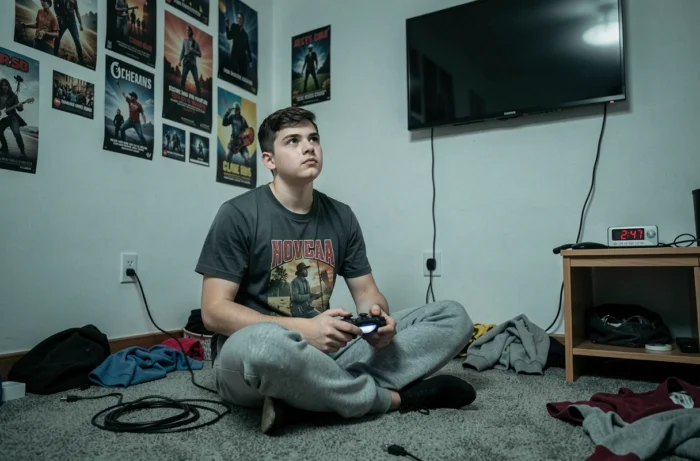
- Set a number of games, not a finish time. Saying “I’ll stop after three matches” is easier to stick to than “I’ll stop at 11 PM,” because you’re not cutting off in the middle of an action. Many players exceed the set time because they start “one last” game that lasts forty minutes.
- Use a discreet alarm (watch vibration, silent notification) rather than a sound that breaks concentration and generates frustration. The alarm serves as a reminder, not a harsh interruption.
- Physically tidy up the setup after the session: turn off the screen, put the headset back on its stand, close the software. This closing ritual sends a signal to the brain that the gaming sequence is over.
- Move to a different room if possible, even briefly. Changing the environment helps the brain switch to rest mode.
The room temperature, an underestimated lever
After a long session, especially with a PC that heats up the room, the ambient temperature can rise a few degrees. The body needs to cool down to fall asleep properly. Opening the window ten minutes before bedtime, or simply airing out during the decompression period, lowers the room temperature and facilitates falling asleep.
Turning off the PC at least fifteen minutes before getting into bed also helps reduce the heat emitted in the sleeping space, especially in small rooms where the setup occupies a large part of the area.
Sleeping better as a gamer relies on three adjustments that require no investment: never play in bed, adapt the type of game to the time, and create a physical buffer between the last game and bedtime. The sleep gained directly translates into responsiveness and decision-making in-game, making the effort doubly rewarding.