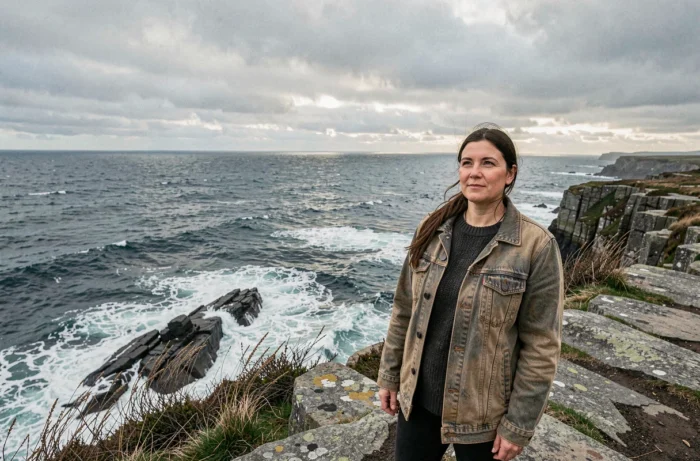
In May, on the Crozon peninsula, the parking lots for coastal trails are almost empty and the low evening light lasts until 9:30 PM. Two months later, the same paths require leaving before 8 AM to avoid the queue. This difference nicely summarizes the choice to be made: in Brittany, the destination changes less than the time of year you visit it.
Brittany in May-June: the coastline before the crowd
Brittany’s spring has seen increased visitor numbers in recent years. Occupancy rates in April-May have significantly risen along the coast, and a growing number of travelers are deliberately shifting their stays to this window rather than the height of summer. It’s easy to see why: temperatures hover around 12 to 17 °C in April-May in Finistère, just right for comfortably hiking on the GR34 without breaking a sweat.
Southern Morbihan is particularly well-positioned. Quiberon and the Gulf of Morbihan offer calm sailing conditions from mid-May, and the oyster farmers of the Auray River still welcome visitors without reservations. The southern Finistère, around Bénodet and Concarneau, operates on the same principle: accessible beaches and off-season accommodation rates.
For those who want to explore Brittany’s web according to the months, this May-June period represents the best compromise between reliable weather and tranquility.
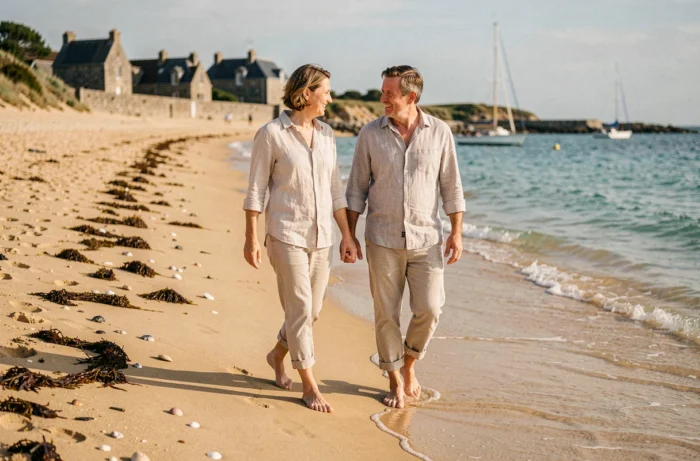
Pink Granite Coast and Côtes-d’Armor in July-August: managing the influx
Let’s not kid ourselves: July and August remain the peak period when northern Brittany reaches its maximum capacity. The Pink Granite Coast, around Perros-Guirec and Trégastel, concentrates visitors along a relatively short coastal stretch. Booking accommodation at least three months in advance is not a luxury; it’s a necessity if you’re aiming for this area in the high season.
To avoid saturation, one can target the inland Côtes-d’Armor. Lake Guerlédan and the Quénécan forest offer freshwater swimming and wooded hiking, less than an hour from the coast. Families find a calmer pace there, with water activities on the lake without the swell.
Festivals and events of the Breton summer
The Breton summer is not just about the beaches. Festivals punctuate the season from June to September, often influencing destination choices. A few highlights:
- The maritime festivals of Brest gather hundreds of traditional boats during their editions, turning the harbor into a spectacle for several days
- The Interceltic Festival of Lorient attracts a massive audience each year in Morbihan, impacting accommodation within a wide radius around the city
- The Vieilles Charrues in Carhaix, in central Finistère, draw an audience that often discovers the inland landscapes on this occasion
Planning your stay around a festival requires booking very early, but it provides a grounding for the trip beyond just beach activities.
Brittany in September: the month that guides underestimate
Recent data makes it a cornerstone of the Breton tourist season, and competitors talk little about it. September combines several concrete advantages: the sea has accumulated warmth over the summer, the low light gives the granite landscapes a golden hue, and more and more French people leave after August 20 to take advantage of better rates and less crowding.
Saint-Malo and the Emerald Coast work particularly well in September. The ramparts can be visited without a rush, restaurants return to a more relaxed service, and accommodation rates drop significantly after the school year starts. For photographers, the bay of Mont-Saint-Michel offers its largest tides at the autumn equinox.

Central Brittany also deserves a visit during this period. The forests of Brocéliande and Huelgoat begin their autumn transition, and the paths are passable without the mud of November. Returns on this point vary from year to year, but overall September remains dry inland.
Brittany in winter: islands and heritage cities
Winter in Brittany discourages many visitors, often wrongly. Temperatures rarely drop below 5 °C along the coastal fringe, and Atlantic storms offer a spectacle that regulars seek out deliberately.
The Breton islands out of season
Belle-Île-en-Mer, Ouessant, and the island of Groix slow down from November to March. This is precisely what makes them interesting: the Breton islands in winter offer an authenticity that is impossible to find in summer. You meet locals, eat in the only open restaurants, and walk on deserted paths. The crossing from Quiberon or Le Conquet takes the same amount of time as in summer, but the boats are less frequent.
Rennes and Vannes for an urban stay
Rennes remains lively all year round thanks to its student population. The Marché des Lices, one of the largest markets in France, operates every Saturday morning regardless of the month. Vannes, more compact, charms with its medieval alleys and the immediate proximity of the Gulf of Morbihan for winter walks.
- Rennes can be reached by TGV from Paris in under two hours, making it a viable option for a long weekend even in low season
- Vannes provides access to the paths of the Gulf of Morbihan, passable year-round and particularly photogenic in overcast weather
- Dinan, between Rennes and the north coast, offers a dense medieval heritage with almost deserted streets from December to February
The choice of the month matters more than the choice of the department. The same Breton place changes radically in atmosphere between June and January, and it’s this variation that allows for multiple visits without fatigue. It’s better to first choose the season that matches your rhythm, then find the place that suits it, rather than the other way around.