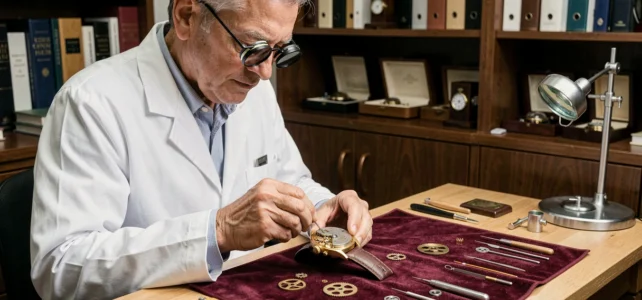
Certus is a French watch brand whose watches are assembled in Besançon, the historical capital of watchmaking in France. Behind accessible prices, the brand relies on an assembly process governed by precise customs rules and on an industrial ecosystem in Besançon that is centuries old. Understanding what lies behind the label “made in France” of a Certus watch requires distinguishing between assembly, the origin of components, and the regulatory framework.
Substantial transformation: what “made in France” means for a Certus watch
The origin marking “made in France” does not guarantee that every component of a watch is produced on the territory. It is based on the notion of substantial transformation, defined by Article 39 of the Customs Code and the European non-preferential origin rules.
In practical terms, it is the location of final assembly that determines the customs origin of the finished product. For Certus, this means that cases, movements, and dials can be imported, as long as the assembly, adjustments, and quality controls are carried out in the French workshop.
This distinction is rarely explained by retailers. When looking to find out where Certus watches are made, the short answer is Besançon, but the complete answer involves an international supply chain where only the final link is located in France.
This legal framework is not unique to Certus. Most entry-level French watch brands operate under the same principle. The claimed expertise is in assembly and quality control, not in the complete manufacturing of components.
Besançon and the watchmaking basin: why Certus’s location is not anecdotal
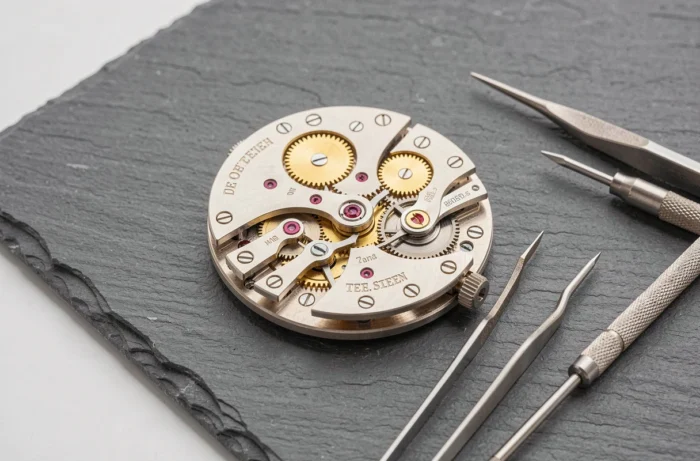
The choice of Besançon as an assembly site is not a marketing decision. The city concentrates a structured watchmaking ecosystem that has been in place since the 18th century, with workshops, specialized subcontractors, and technical training dedicated to the trade.
Certus, founded in 1988 within the family group SMB established by Philippe Bérard in 1978, is part of this continuity. The Besançon region has seen dozens of manufacturers rise and fall over the decades, but it retains a network of skills that few other French cities can offer.
An industrial network that benefits entry-level brands
The major Swiss and French watch houses capture a portion of the media attention, but the Besançon basin also supports more accessible brands. For Certus, this proximity to technicians trained in watchmaking allows for careful assembly at a controlled cost.
The existence of this network explains why a brand positioned at low prices can claim a real territorial anchoring, without it being solely a commercial argument.
Quartz movement and components: anatomy of a Certus watch
Certus watches use quartz movements, which are reliable and inexpensive to produce. This technical choice aligns with the brand’s pricing strategy: quartz offers superior accuracy compared to mechanical movements for a fraction of the price.
Materials vary by collection. Stainless steel cases, leather or metal straps, and mineral glasses are common. Some models include chronograph functions or date displays.
- Quartz movement for precision and robustness in daily use, without regular maintenance
- Steel cases in men’s and women’s ranges, with plated variants for gold finishes
- Genuine leather or steel straps, depending on the desired style (formal or casual)
- Variable water resistance depending on the references, generally suitable for splashes but not for diving
This technical architecture is not exceptional in the entry-level segment. What distinguishes Certus is the assembly done in France rather than in an Asian factory, with final control carried out in Besançon.
Quality-price ratio of Certus watches compared to competing brands
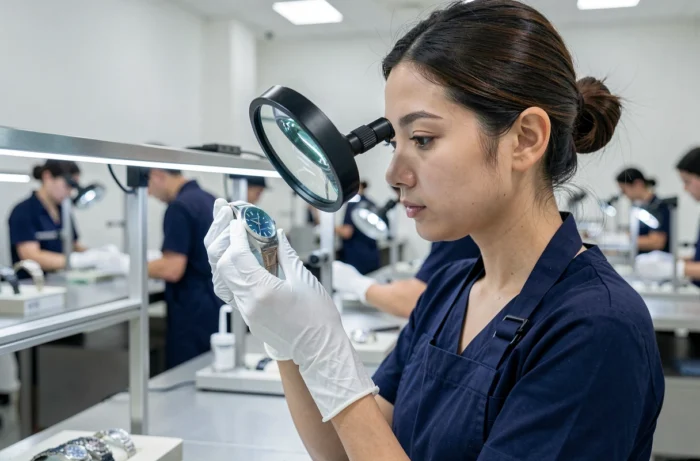
Certus positions itself in a segment where competition is fierce. Brands like Seiko offer automatic watches at similar prices, while Pierre Lannier, another French brand, occupies a similar niche with assembly also taking place in Besançon.
What Certus does better than average
The Certus range covers a wide spectrum: men’s, women’s, and children’s watches, with designs varied enough to appeal to multiple profiles. The catalog regularly updates its references, avoiding the “stagnant collection” effect observed in some entry-level competitors.
Price remains the main purchasing argument. For a limited budget, a Certus watch offers a product assembled in France with decent finishing. Comparisons with imported watches at equivalent prices often favor Certus in terms of perceived material quality.
Limitations to be aware of
A quartz movement does not have the longevity or heritage value of a mechanical caliber. The Certus watch is a functional and accessible object, not a horological investment. Enthusiasts looking for an automatic movement or high-end finishing will need to turn to other brands, often at significantly higher prices.
- No mechanical movement in the catalog, which excludes collectors
- Almost nonexistent resale market compared to Seiko or Orient
- Decent finishes but lacking the artisanal details found on watches two to three times more expensive
Certus does not claim to compete with high-end watchmaking. The brand embraces a clear positioning: a reliable French watch at a low price, assembled in a Besançon workshop. For those looking for exactly that, the contract is fulfilled. The trap would be to expect more or to confuse “assembled in France” with “entirely made in France,” two very different realities in contemporary watchmaking.