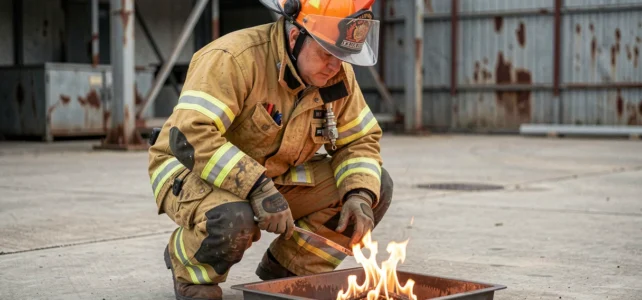
The letters B, C, F, and K designate categories of fire whose classification logic is based on the nature of the fuel. Each class requires a specific extinguishing agent, and a wrong choice can worsen the fire instead of extinguishing it. Where confusion arises is that the meaning of the same letter varies depending on the reference system used: the European system and the North American NFPA system do not categorize the same fuels under the same letters.
Class C: flammable gas or electrical equipment depending on the reference
This is the most common point of divergence between French-speaking and English-speaking guides. In Europe, class C refers to flammable gas fires (propane, butane, natural gas, acetylene). Extinguishing involves cutting off the gas supply before any intervention with a powder extinguisher.
In the NFPA system used in the United States, class C covers fires involving energized electrical equipment. A fire caused by a short circuit in an electrical panel or a computer server falls into this category. The recommended agent is CO₂ or powder, never water, due to the risk of electrocution.
This divergence has concrete consequences for anyone consulting a technical sheet or safety guide written in another country. Before relying on a classification, one must identify the source reference. Understanding the different classes of fire B C F K assumes knowing which normative system one is in; otherwise, one risks applying the wrong extinguishing protocol.

Class B: flammable liquids and liquefiable materials
Class B encompasses fires involving flammable liquids or liquefiable solids. Gasoline, fuel oil, solvents, paints, alcohols, industrial greases: all these fuels produce flames that spread across the surface through radiation and evaporation.
The classic mistake is to spray water on a class B fire. Water, being denser than many hydrocarbons, sinks beneath the burning liquid and causes violent splashes that spread the flames. The suitable agents are foam (which forms an insulating film on the surface of the liquid), multipurpose powder, or CO₂.
According to some recent sources, class B may also include flammable gases or liquefiable materials in several national references, which blurs the boundary with the European class C. Field reports vary on this point depending on the countries and local standards applied.
Typical B risk environments
- Painting workshops and spray booths where solvents are omnipresent, with a potentially explosive atmosphere in case of insufficient ventilation
- Gas stations and fuel depots, where the liquid layer on the ground constitutes the main fire scenario
- Laboratories handling volatile liquid chemical reagents, which often require specific extinguishers within immediate reach
Class F and Class K: cooking oils and saponification
Class F (European standard) and Class K (NFPA standard) refer to the same type of fire: that of cooking oils and fats heated to very high temperatures. The letter distinction simply reflects the difference in nomenclature between the two systems.
A fryer fire reaches temperatures well above those of an ordinary class B fire. The main risk is not just the flame, but re-ignition: even after apparent extinguishment, the mass of oil retains enough heat to spontaneously reignite.
The saponification mechanism
The recommended extinguishing agent for classes F and K is a chemical wet agent based on potassium salts. Upon contact with the burning oil, it triggers a saponification reaction: the fats transform into a soapy crust that isolates the surface of the fuel from the ambient oxygen.
This process has a double advantage. It extinguishes the flame and lowers the temperature of the oil, reducing the risk of re-ignition. Water or powder extinguishers are contraindicated in this context: water causes explosive vaporization upon contact with oil, and powder does not sufficiently cool the fatty mass.
Professional kitchens (restaurants, collective canteens, food laboratories) are the environments where this class of fire occurs most frequently. Regulations generally require the presence of class F or K extinguishers in close proximity to cooking stations.
Choosing the right extinguisher for each class of fire
The selection logic is based on a strict correspondence between the fuel and the extinguishing agent. Using the wrong agent is not just ineffective: an inappropriate extinguisher can cause a violent spread of the fire.
- Class B (flammable liquids): film-forming foam, multipurpose ABC powder, or CO₂, depending on the size of the fire and the ventilation of the area
- European Class C (gas): dry BC or ABC powder after cutting off the gas supply, as extinguishing the flame without cutting the gas creates an explosion risk
- Class F/K (cooking oils): exclusively chemical wet agent, to benefit from the saponification effect and cooling
- American Class C (electrical): CO₂ or powder, never water or foam as long as the equipment remains energized
The choice also depends on the environment. In a server room, CO₂ leaves no residue on electronic components. In a mechanical workshop, multipurpose ABC powder covers most scenarios. In a collective kitchen, only the chemical wet agent extinguisher addresses the F/K risk.
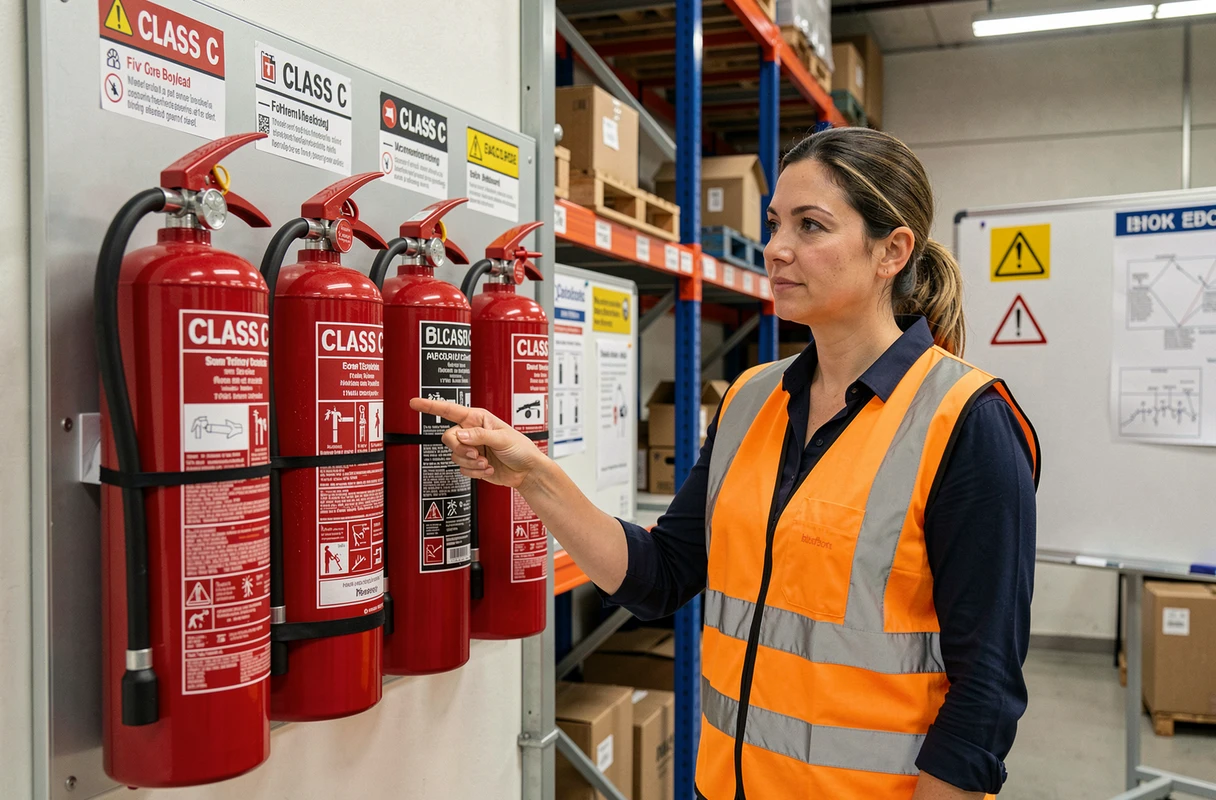
The standardized signage on extinguishers indicates the classes covered by pictograms. An extinguisher marked “ABC” is not suitable for class F fires. Checking this label before any use remains the simplest action to avoid worsening the incident. The available data does not allow for concluding that a single type of extinguisher covers all scenarios: total versatility does not exist in fire protection.